


Recovery rarely happens all at once.

For many who arrive at our practice, the journey has already been long. Years of recurring discomfort, temporary relief cycles, and emotional exhaustion. This archive documents realistic, conservative recovery experiences from people dealing with severe structural and nerve-related conditions.

Request a Private Case Review
Quiet treatment room with natural light

Observation over assumption.

Chronic pain recovery is rarely linear. Improvement often happens gradually—some days are easier than others. In our residential practice environment, we spend time quietly reviewing MRI films, observing movement limitations, and understanding the muscular guarding that develops after months of pain.

We do not rely on aggressive interventions. Instead, we focus on individualized, conservative support requiring repetition, patience, and careful observation.

Workspace reflecting a sedentary lifestyle
Case Archive 01

The toll of prolonged sitting.

Patient Profile: An IT professional working remotely from overseas. Years of prolonged sitting had culminated in severe sciatica, characterized by deep, radiating numbness down the leg. The prospect of a long flight or extended driving had become a source of significant anxiety.

Before arriving in Changzhou, we reviewed his MRI scans via email. Upon arrival, the initial days were complicated by travel fatigue and jet lag, leading to temporary flare-ups in discomfort. Progress was not immediate.

Our sessions focused heavily on releasing deep muscular guarding and addressing structural tension that had built up over years. Slowly, his walking tolerance shifted.

Current Status: Upon returning home, he noted that while he cannot claim to be 100% devoid of any sensation, the condition no longer dictates his life. He is able to sit for an hour without distress, his sleep is uninterrupted, and he has successfully discontinued his reliance on pain medication.
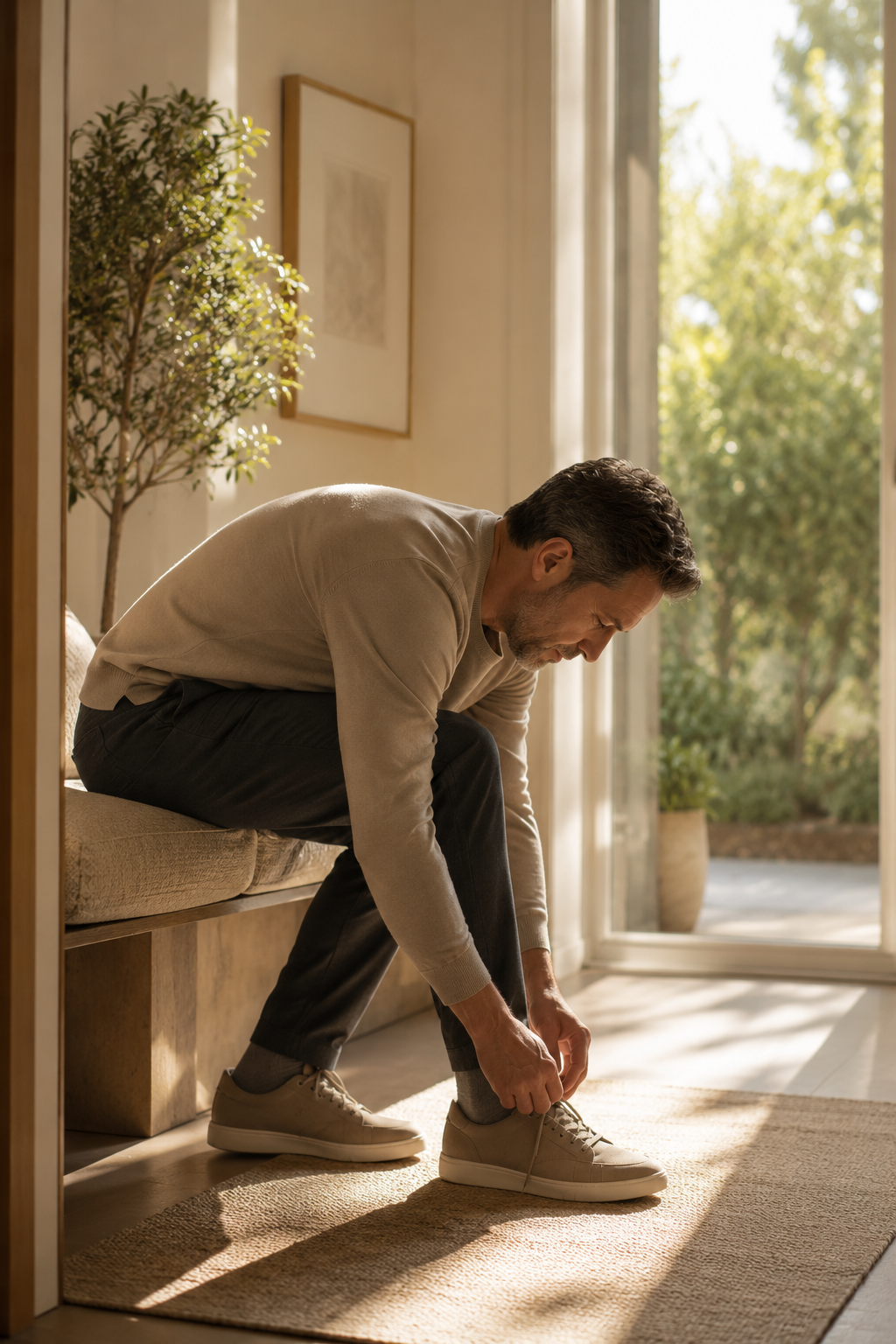

Case Archive 02

Navigating the edge of surgery.

Patient Profile: Presenting with an L5-S1 disc herniation, this patient arrived with severe lumbar stiffness and an intense fear of sudden movement. Recurring nerve irritation had led him to seriously consider surgical intervention as a last resort.

Our initial consultation was rooted in radical honesty. We explicitly stated that if symptoms progressed to severe nerve impairment—such as incontinence—surgery would be medically necessary. No guarantees of a cure were offered; the goal was to explore if conservative care could still provide a pathway forward.

Treatment involved cautious mobility support and careful observation of his movement patterns. A significant portion of the recovery involved addressing the deep psychological fear associated with bending.

Current Status: There was no overnight miracle. However, the profound lumbar stiffness has significantly subsided. He has regained the ability to autonomously bend forward to tie his shoes, and importantly, he has been able to safely postpone his surgical plans.

Reviewing medical documents
Looking out a window, reflecting on slow recovery
Case Archive 03

A test of endurance.

Patient Profile: Suffering from a severe case of frozen shoulder, the patient experienced profound restriction. She was unable to reach backward or overhead, making simple tasks like dressing incredibly difficult. The most exhausting symptom was the sharp night pain that consistently disrupted her sleep.

We set realistic expectations immediately: this would be an exceptionally slow, multi-month process. Recovery from frozen shoulder requires immense patience and repetitive, measured sessions.

During her time in Changzhou, we worked on gradually, painstakingly encouraging the joint capsule to yield. The frustration of slow progress was a constant companion, requiring emotional resilience as much as physical intervention.

Current Status: After months of consistent conservative care, the severe restriction has lifted. She can now comfortably manage daily hygiene and dressing routines, and crucially, the night pain has subsided, allowing for restorative sleep.

The Overseas Patient Experience

A practical overview of how we coordinate care for those traveling to our Changzhou practice.

01. Before Traveling

  • Detailed MRI and medical history review via email.
  • Transparent discussion of expectations and suitability.
  • Initial assessment to ensure travel is a logical next step.

02. During Your Stay

  • A quiet, unhurried treatment schedule in a residential setting.
  • Daily observation of practical mobility and tension patterns.
  • A calm rhythm focused entirely on conservative recovery.

03. Returning Home

  • Ongoing communication and progress monitoring.
  • Guidance on movement limitations and daily posture.
  • Support for managing the inevitable fluctuations of recovery.

A Note on Honest Expectations

Trust in healthcare is built on transparency, not promises. We believe it is vital to state clearly:

  • Not every case improves equally. Individual physiology and history play a massive role.
  • Recovery is inherently unpredictable. Flare-ups are a normal part of the conservative healing process.
  • In cases of severe nerve damage or structural failure, surgery is sometimes the necessary and correct option.
  • We value medical honesty over securing bookings. If we believe conservative care is not appropriate for your condition, we will tell you.

Discuss Your Situation Privately

To maintain a quiet and focused practice environment, all inquiries are reviewed personally before an initial consultation is confirmed. Please provide as much detail as you feel comfortable sharing.

Phone / WhatsApp +86 16651580250
Practice Location Room 318, Building 49, Jinse Xincheng Zhonglou District, Changzhou City Jiangsu Province, China (Zip: 213002)

Your information is kept strictly confidential.